

Know Your Rights
For immigration detention support, verification consultations, legal service referrals, or to report ICE activities, you may contact the Delaware Coalition for Immigrant Justice’s Hotline: (302) 500-5551.
The Delaware Office of New Americans provides the following information. This information is not intended to provide legal advice and is not a substitute for legal assistance. This guidance outlines the constitutional protections under the Fourth Amendment and clarifies the rights and privileges of all Delaware residents, regardless of immigration status.
Please consult an attorney for legal advice for your personal situation. A list of immigration attorneys is listed on this page under “Resources”.
A message from Governor Matt Meyer and Elected Officials
Guidance Documents (PDF)
Understanding ICE Warrants
Judicial Warrant
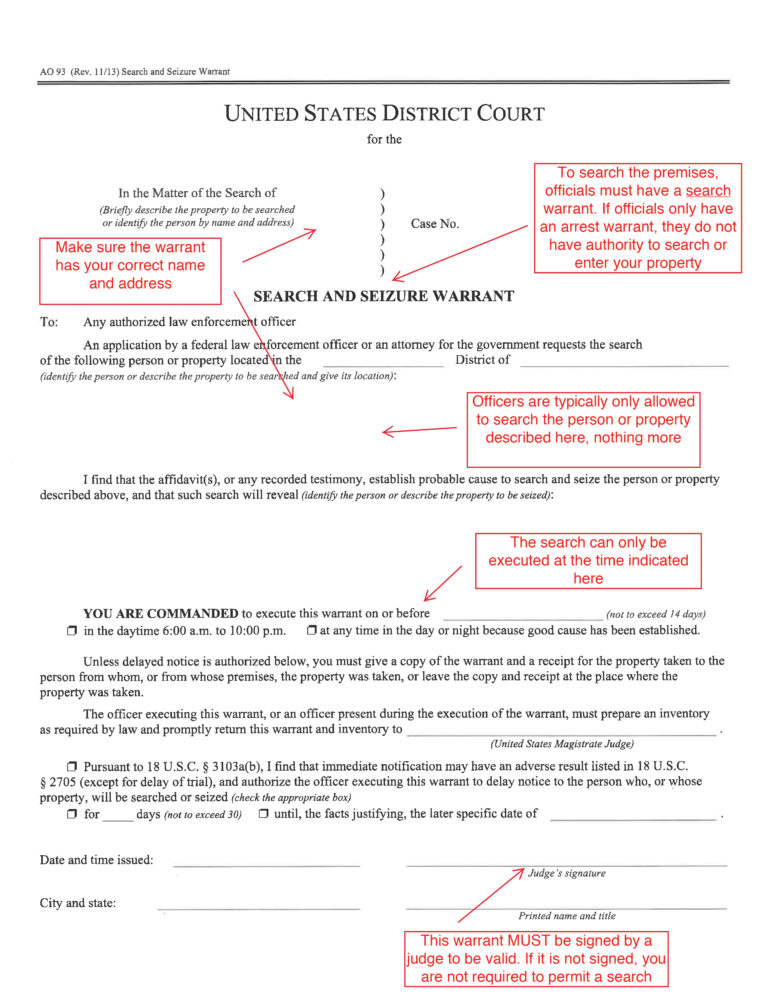
A judicial warrant is issued and signed by a judge after a showing of probable cause. This type of warrant carries stronger legal authority and may allow officers to enter a residence if it specifically authorizes that action.
Here’s what to look for:
- The top of the document should say “U.S. District Court.”
- The warrant should identify the correct person, address, or property to be searched.
- Officers are generally limited to searching only the person, place, or property described in the warrant.
- A search warrant is different from an arrest warrant. An arrest warrant alone does not authorize officers to search or enter a home.
- Check the date and time limits. The warrant can only be executed within the time period listed.
- Check the signature. The warrant must be signed by a judge to be valid.
Administrative Warrant
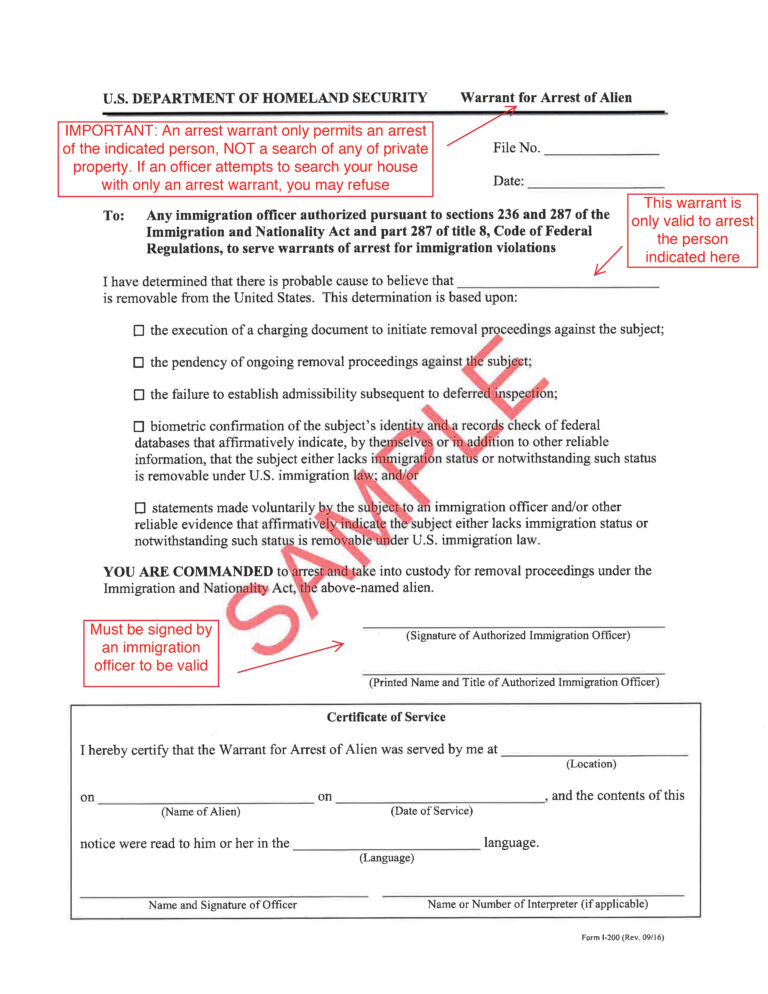
An Administrative Warrant used by immigration enforcement officers is issued internally by the U.S. Department of Homeland Security. An administrative warrant does not grant ICE permission to enter or search your house.
If ICE agents show you an administrative warrant, you do not have to let them in. If they force their way in, say you do not consent, but do not try to stop them.
Remember:
- The document must be signed by an immigration officer to be valid.
- The warrant only permits an arrest of the indicated person, NOT a search of any private property.
Emergency Planning
Plan ahead in the event that you or a loved one is detained or arrested by immigration enforcement officials. Click below for more information.
Statewide Protections
Law Enforcement
In the State of Delaware, state and local enforcement agencies are prohibited from entering into agreements to exercise federal civil immigration authority under the Immigration and Nationality Act, also known as 287(g) agreements. This is the result of House Bill 182 with House Amendment 1, legislation passed during the first General Assembly and signed into law by Governor Matt Meyer.
Citizen’s Arrest
In 2025, Governor Matt Meyer signed House Bill 153 with House Amendment 1 into law, prohibiting individuals without explicit statutory authority from making arrests or detaining others. House Bill 153 with House Amendment 1 bans the practice commonly known as “Citizen’s Arrest”.
If you witness someone being detained or arrested by an individual who you believe does not have the explicit legal authority to do so, do not intervene. Observe and document safely, if possible. Call 9-1-1 if something seems unsafe or unlawful.
Impersonation of a Federal Law Enforcement Official
House Bill 152 with House Amendment 1 was signed into law by Governor Matt Meyer in 2025, expanded the criminal offense of impersonating a police officer, firefighter, emergency medical technician, paramedic, or fire officer to also prohibit the impersonation of a federal officer.
If you believe someone may be falsely claiming to be a federal officer or Immigration and Customs Enforcement (ICE) agent, do not physically intervene or comply beyond what is necessary for your immediate safety. Instead, request identification if it is safe to do so, and immediately report the situation to local law enforcement by calling 9-1-1.
You may also submit documentation if you witness misconduct by a federal agent by clicking using the Federal Misconduct Form.
Detention Facilities
House Substitute No. 2 for House Bill No. 151, signed into law by Governor Matt Meyer in 2026, prohibits Delaware state and local governments from contracting with or financially supporting privately operated detention facilities. The legislation bars public entities from funding, incentivizing, or receiving payments connected to the operation of private detention centers, while creating limited exemptions for certain nonsecure juvenile and residential alternative-to-detention programs.
Child-serving Entities, Higher Education Institutions, Places of Worship, and Healthcare Facilities
House Substitute 2 for House Bill 94, signed by Governor Matt Meyer in 2026, prohibits a state or local law enforcement officer and/or agency from cooperating with federal agencies conducting civil immigration enforcement activities at child-serving entities, institutions of higher education, places of worship, or healthcare facilities except in exigent circumstances.
Immigration Detainers
House Substitute 1 for House Bill 368, signed by Governor Matt Meyer in 2026, prohibits detaining or extending the detention of any person based solely upon an immigration detainer or civil immigration warrant.
State Courthouses and the Delaware Department of Labor Offices
House Substitute 1 for House Bill 150, signed by Governor Matt Meyer in 2026, prohibits civil arrests from being made in courthouses or Department of Labor Offices where the Industrial Accident Board conducts hearings.
Resources
If you believe an additional organization or resource should be included on this page, please email onainfo@delaware.gov.